321 rocznica podpisania polskiej Konstytucji 3 Maja z 1791 roku została uczczona podczas Mszy Świętej w Kaplicy Sanktuarium św. Jana Pawła II w Orchard Lake, z udziałem Chóru „Filaretów”. W uroczystości wzięły udział polskie szkoły, polscy weterani oraz harcerze, prezentując wystawę patriotyczną.
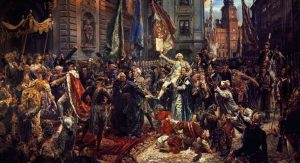
Obraz Jana Matejki „Konstytucja 3 maja 1791 roku” nie jest zwykłym malarskim zapisem historycznej chwili. To gęsto wypełniona symbolami opowieść o triumfie, zdradzie, politycznym chaosie i ludziach, którzy mieli odmienić los Rzeczypospolitej. Na płótnie obok bohaterów reform pojawiają się też przyszli zdrajcy, a część postaci zapowiada wydarzenia, które dopiero miały nadejść.
W centrum obrazu nie znajduje się król, lecz marszałek Stanisław Małachowski, niesiony przez posłów z konstytucją w dłoni.
Matejko umieścił na płótnie także postaci i znaki zapowiadające przyszłe dramaty, m.in. Kościuszkę z bandażami i Branickiego jako symbol zdrady.
Dzieło pokazuje nie tylko radość po uchwaleniu konstytucji, ale też polityczny konflikt, napięcie i ukryte przesłanie o losach państwa.
Kto znajduje się na obrazie Matejki?
Na obrazie centralną postacią, niesioną na barkach dwóch posłów, nie jest – wbrew powszechnemu mniemaniu – król Polski Stanisław August Poniatowski. Tą osobą, która macha dokumentem, jest w rzeczywistości marszałek Sejmu Wielkiego Stanisław Małachowski.
Polityk podtrzymywany jest przez posłów reprezentujących symbolicznie dwie najważniejsze ówcześnie ziemie Korony: Małopolskę i Wielkopolskę.
Pod jego prawym ramieniem znajduje się owinięty w bandaże Tadeusz Kościuszko ze sztandarem Rzeczypospolitej Obojga Narodów. Matejko przypomina tym ujęciem późniejsze wydarzenie – powstanie kościuszkowskie i odniesienie ran przez dowódcę insurekcji, których doznał on podczas bitwy pod Maciejowicami w 1794 roku.
Tuż nad nim znajduje się inny wielki bohater narodowy – postać na wysokim koniu w prawym rogu obrazu to nie kto inny, jak sam książę Józef Poniatowski. To również zapowiedź przyszłości i nadchodzących walk narodowo-wyzwoleńczych.
Dzieło pełne symboli
Znacznie ciekawsza scena rozgrywa się jednak na środku ulicy. Leżący na bruku człowiek w czerwonym ubraniu to poseł Jan Suchorzewski. Z kieszeni mężczyzny wypadają karty, będące tutaj dwuznacznym symbolem. Matejko zamieścił je zarówno, jako przenośnię zdrady, jak i przedmiot rzeczywisty – polityk, będący dość nędznym hazardzistą, po złączeniu się ze stronnictwem prorosyjskim zaczął w dziwny sposób wygrywać ogromne kwoty w karty.
Dziecko znajdujące się nad nim przedstawia jego własnego syna, którego zamordowaniem szantażował innych, jeżeli dokument zostanie przyjęty. Na malunku przerażony chłopiec wyrywa się ojcu, zaś ksiądz Hugo Kołłątaj (postać w sutannie, stojąca na środku) spokojnym i stanowczym ruchem stara się zapobiec „zamieszaniu” i patrzy na szaleńca z pogardą.
Z kolei na wprost Kołłątaja stoi zdrajca Franciszek Ksawery Branicki. Magnat jest zły na sytuację, a przyjęta przez niego poza pokazuje wściekłość. Patrzy nad Suchorzewskim i zdaje się udawać, że wcale się nie znają. Przywódca konfederacji targowieckiej spogląda w kierunku Kościuszki, przeciw któremu wkrótce będzie walczył po stronie Rosji i najwyraźniej zaczyna z tego sobie zdawać sprawę.
Tuż obok Kołłątaja i Branickiego przechodzi król Stanisław August Poniatowski. Postać ostatniego polskiego władcy jest wmieszana w tłum ludzi na schodach, którzy składają pocałunki na jego dłoniach. Monarchę wita m.in. prezydent Starej Warszawy Jan Dekert, który w rzeczywistości zmarł na rok przed przyjęciem dokumentu. Matejko nie chciał jednak pominąć tak prominentnej i ważnej osobistości, która walnie przyczyniła się do powstania Konstytucji 3 maja.
Ponadto reprezentuje on stan mieszczan, a malarz chciał uchwycić na swoim obrazie wszystkie klasy społeczne, które zyskały na Konstytucji 3 maja. Na malunku są zarówno chłopi, jak i szlachta oraz – na dalekiej krawędzi dzieła – dwóch Żydów, którzy przypatrują się całej scenie.
The 321st Anniversary of the signing of the 3rd of May Polish Constitution of 1791 was celebrated during the Holy Mass at St. John Paul II Shrine Chapel at Orchard Lake with Filaret’s Choir. We had Polish Language Schools, Polish Veterans, and Scouts with a patriotic exhibit.
Jan Matejko’s painting “The Constitution of 3 May 1791” is not an ordinary painting record of a historical moment. It is a story densely filled with symbols about triumph, betrayal, political chaos, and people who were to change the fate of the Republic of Poland. On the canvas, next to the heroes of the reforms, future traitors also appear, and some of the characters announce events that were yet to come.
In the center of the painting, there is not a king, but Speaker of the Great Sejm, Stanisław Małachowski, carried by two Great Sejm representatives with a constitution in his hand.
Matejko also placed characters and signs on the canvas announcing future dramas, like Tadeusz Kościuszko with bandages and Branicki as a symbol of betrayal.
The work shows not only the joy after the adoption of the constitution, but also the political conflict, tension, and hidden message about the fate of the state.
Who is in Matejko’s painting?
In the painting, the central figure, carried on the shoulders of two envoys, is not, contrary to popular belief, the King of Poland Stanisław August Poniatowski. The person waving the document is, in fact, the Speaker of the Great Sejm, Stanisław Małachowski.
The politician is supported by two Great Sejm representatives symbilising the two most important lands of the Crown at that time: Małopolska and Wielkopolska.
Under his right arm is Tadeusz Kościuszko, wrapped in bandages, with the banner of the Polish-Lithuanian Commonwealth. Matejko recalls a later event – the Kościuszko Uprising and the wounds suffered by the commander of the insurrection during the Battle of Maciejowice in 1794.
Just above him is another great national hero – the figure on a high horse in the right corner of the painting is none other than Prince Józef Poniatowski himself. It is also a harbinger of the future and the upcoming national liberation struggles.
A work full of symbols
A much more interesting scene, however, takes place in the middle of the street. The man in red clothes lying on the pavement is Jan Suchorzewski. Cards fall out of the man’s pocket, which are an ambiguous symbol here. Matejko depicted them both as a metaphor of betrayal and as a real object – the politician, who was a rather miserable gambler, after joining the pro-Russian party, began to win huge sums of money in a strange way.
The child above it depicts his own son, who he was threatening to murder if the document was to be signed. In the painting, the terrified boy breaks away from his father, while the priest Hugo Kołłątaj (a figure in a cassock, standing in the middle) calmly and decisively tries to prevent the “confusion” and looks at the madman with contempt.
On the other hand, in front of Kołłątaj stands the traitor Franciszek Ksawery Branicki. The tycoon is angry with the situation, and the pose he has adopted shows rage. He looks at Suchorzewski and seems to pretend that they don’t know each other at all. The leader of the Targowica Confederation looks towards Kościuszko, against whom he will soon fight on Russia’s side, and apparently begins to realize it.
Right next to Kołłątaj and Branicki, King Stanisław August Poniatowski passes. The figure of the last Polish ruler is intermingled with the crowd on the stairs, who kiss his hands. The monarch is greeted by the president of Old Warsaw, Jan Dekert, who in fact died a year before the document was adopted. However, Matejko did not want to omit such a prominent figure, who contributed greatly to the creation of the Constitution of 3 May.
In addition, it represents the state of the townspeople, and the painter wanted to capture in his painting all the social classes that benefited from the Constitution of May 3. The painting depicts both peasants and nobles, and – on the far edge of the work – two Jews who are watching the whole scene.
 The Polish American Congress (PAC) is a U.S. umbrella organization of Polish-Americans and Polish-American organizations. Its membership is composed of fraternal, educational, veterans, religious, cultural, social, business, and political organizations, as well as individuals.